Showing posts with label The Oscar Project. Show all posts

Thursday, July 20, 2017

The Oscar Project: 1949


So when I finally finished watching the last of the Oscar-nominated films of 1935 a few months ago, I was excited to set myself down in front of a cinematic something that was NOT from the year 1935. I picked out Carol Reed's THE FALLEN IDOL, a British film from 1949. The story of a young boy caught up in a nightmare world of deceitful adults whose behavior he can't fully comprehend, the film is filled with suspenseful twists and turns that must have had Hitchcock turning green with envy—especially since 1949 was the year "the master of suspense" released one of his biggest duds, UNDER CAPRICORN (I know; neither have I).


In THE FALLEN IDOL, Bobby Henry stars as young Philip, who lives in the grandiose French embassy in London with his parents. When his father heads out of town to fetch his mother from the hospital, Philip is left in the care of the embassy servants—namely the butler, Baines, who the young boy idolizes, and the butler's cold, cruel wife, Mrs. Baines, who has no tolerance for kids. There's also a pretty young blonde thing on the embassy staff who lately seems moody. Mrs. Baines begins to suspect her husband and blondie have been having an affair. Philip soon stumbles into the middle of a private and personal conversation that he's asked to deny having heard, thereby becoming a pawn in a deadly love-triangular chess game played throughout the empty, shadow-filled embassy. (The building's expansive entryway features a large chessboard-like floor upon which the adults make their moves, as Philip observes from the balcony above.) 

The film explores what happens when all sorts of various untruths—children's wildly enthralling adventure yarns; the ones people accidentally tell when they don't have all the facts; lies told to protect someone you love; the ones that are used to hide true feelings—all get mixed up in the mind of an inexperienced child who is faced with situations he intuitively knows are serious, but doesn't fully understand. The film creates tension and dread from the simplest of images—wasps crawling on a plate of pastries in a bakery window; a hairpin dropping onto a pillow next to a sleeping child—carefully calculated to casually send shivers down your spine. 

THE FALLEN IDOL is one of the best films of 1949. A brief-but-memorable turn by Dora Bryan as Rose, a "lady of the night" Philip encounters at the local police station (and, again, doesn't quite fully comprehend) is worth the price of the rental all by itself! When the film ended, I looked it up on my list to see if anyone at the Oscars had paid any attention. Sure enough, Carol Reed was up for Best Director, and Graham Greene was also nominated for his terrific screenplay. I figured I might as well see what other films had been nominated that year, and voilá—The Oscar Project of 1949 was underway. 
  

Interestingly, THE WINDOW was the last film I watched from my list of 1949 nominees, and it has a theme very similar to the theme of the film I watched first. Basically a top-drawer b-picture thriller, like THE FALLEN IDOL, this film also involves a naive young boy living in a world of lies. But since THE WINDOW is an American film instead of a European one, it's much less nuanced and it beats you over the head a little more often than THE FALLEN IDOL.

Young Tommy (Bobby Driscoll, appearing "by special arrangement with Walt Disney") lives with his working-class parents in a NYC tenement and is always running around the neighborhood telling lies. He's constantly reprimanded by his exasperated ma and pa, but they really are at their wits end and just don't know what to do with the boy. Naturally, Tommy then witnesses a grizzly murder, but when he excitedly reports what he's seen, nobody will believe him—nobody, that is, except for the seemingly normal upstairs couple who committed the heinous crime. An exciting game of cat-and-mouse is set into motion that manages to generate some thrills and suspense. THE WINDOW was up for the year's Best Editing award, though nothing about the editing stood out to me in particular. Admittedly, the events in the film did seem to have been assembled in a logical order.  


By 1949 Hollywood had began churning out a number of quality pictures exploring the experiences of American soldiers in WWII. Nominated films set in the midst of the war include SANDS OF IWO JIMA, BATTLEGROUND, THE HASTY HEART and TWELVE O'CLOCK HIGH. I'm normally not particularly drawn to war films, so I hadn't seen any of these before. 

The best of the bunch is TWELVE O'CLOCK HIGH—though I'm embarrassed to admit that, from the title alone, I thought I would be watching a fairly dated teen drama set in an inner-city high school, with Gregory Peck as the new history professor on campus who struggles to connect with a ragtag bunch of misfit students (he eventually succeeds!). But now that I think about it, I wasn't actually that far off. The film is set not in a high school, but at the English base of the U.S. Army's Eighth Air Force, with Gregory Peck's General Savage taking over command of a ragtag group of young American airmen after Colonel Davenport (Gary Merrill, excellent) is deemed unfit to lead because he's grown way too fond of the boys. That sounded dirtier than it actually is. Basically, he was just too nice a guy.


The film's opening title card reads, "This Motion Picture is humbly dedicated to those Americans, both living and dead, whose gallant effort made possible daylight precision bombing. They were the only Americans fighting in Europe in the fall of 1942. They stood alone, against the enemy and against doubts from home and abroad. This is their story." And what an incredible story—and motion picture— it is. I had a tub of popcorn in my lap and was geared up for heroics and patriotism, but the film has more in store than that. Though TWELVE O'CLOCK HIGH does offer heroism, the message, ultimately, is that people aren't made for war. Men can be brave, sure, but war will break and destroy them just the same. Gregory Peck deservedly received a Best Actor nomination, the film was up for Best Picture, and Dean Jagger took the Oscar for Best Supporting Actor. Even Hugh Marlowe, who usually seems to be made out of dried driftwood, stirs the emotions with his performance here. 

Another terrific film I'd never heard of before is BATTLEGROUND. A fellow contender for Best Picture, the film offers a different look at American troops in Europe. According to Wikipedia, "The film is notable for portraying American soldiers as vulnerable and human. While they remain steadfast and courageous, each soldier has at least one moment in the  film when he seriously considers running away, schemes to get sent back from the front line, slacks off, or complains about the situation he is in. BATTLEGROUND is considered to be the first significant American film about WWII to be made and released after the end of the war." 


Filmed entirely on Hollywood sound stages, BATTLEGROUND immerses the audience in a nightmare. We follow a company of soldiers as they roam through villages and forests, all shrouded in thick fog. People appear briefly from the fog and then disappear again. Was that the enemy, or a friend? The film is loaded with great dialogue, including an exchange where two companies of seemingly American troops gauge each other's authenticity (they could actually be Germans!) by running through a series of rapid-fire tests involving the latest Hollywood gossip and up-to-the-minute American slang. There's also a brilliantly bizarre thread that runs through the film involving a set of false teeth. The film doesn't shy away from the horrors of war, the grim realities, the feeling that you're stuck in a horrible dream from which you cannot awaken. Not even Ricardo Montalban's devastating handsomeness guarantees him safety here.

William A. Wellman was nominated for directing; the film also received nominations for Best Supporting Actor (James Whitmore) and Best Editing, and took home full-on awards for Paul Vogel's foggy black and white cinematography and for Robert Pirosh's excellent story and screenplay. 

John Wayne earned the first of his two Best Actor nominations for SANDS OF IWO JIMA, a picture that seems to have been constructed primarily to give a backstory to the American Marines in the South Pacific who were immortalized by the monument showing the raising of the U.S. Flag on Mount Suribachi. The film even features, in small roles, three of the ex-Marines who were involved in the IWO JIMA flag-raising event—and with all due respect, fellas, I can pick the three of you non-actors out of the crowd the instant you open your mouths to deliver your lines. Sorry, but yikes!


Though IWO JIMA includes some intensely realistic warfare, someone also decided to throw in plenty of wartime racism! Wayne keeps referring to his foes as "nips," and at one point calls them "those little lemon-colored characters" who may be laying in wait for them. Lots of jokes too about the soldiers kissing and marrying each other, and there's even a scene of the men admiring each others' physiques. It's weird. 

But the award (not an Oscar) for Most Homoerotic War Film of 1949 goes to THE HASTY HEART. I'd never heard of this one either, but Richard Todd was up for Best Actor, so I sat down to check it out. 


The story is pure corn. When military doctors at a Burma outpost for wounded Allied soldiers discover that an ill-tempered Scottish soldier (Todd) is dying and only has 30 days to live, they decide not to tell him and instead stick him in a hut with bunch of other recovering soldiers from around the world. (They don't want to transfer him home to Scotland, since he has no family and would surely die alone.) They hope that the grouchy Scot will finally learn the true meaning of friendship before he dies. Patricia Neal is on hand as the nurse who takes care of the ailing men, and of course she develops romantic feelings for the man who's about to die. 

I know that probably doesn't sound very gay-sexy, but there's more. First of all, Richard Todd cuts a fine figure, and he keeps running around inside the hut without his shirt on! 


And then there's also a scene where future U.S. President Ronald Reagan helps the nearly-naked Scotsman learn about the true meaning of friendship by giving him an intimate massage while discussing highly personal things!


I realize it could still be said that all of this is just my overly-active dirty gay mind at work, and that I'm full of wishful thinking, but wait! The film also includes an ongoing gag that involves the Scotsman's bunk-mates constantly scheming to get a look up the underside of his kilt! The pretense is that they want to find out whether or not he's wearing any underwear, but I ask you: When engaging in this sort of kilt-peeping, has anyone ever really had their heart set on getting a peek at a pair of men's boxer briefs? If you ask me, it's pretty clear these fellows are hoping for a glimpse of a hairy Scottish arse, penis, or ball-sack. They've all been away from their wives and girlfriends for a very, very long time.


For sporty audiences who were growing weary of war, there were a couple of Academy Award-nominated baseball movies at the local cinema in 1949; both were nominated for Best Motion Picture Story of the year. THE STRATTON STORY, an earnest yawn-inducer that somehow actually won the Oscar, tells of Monty Stratton (a too-old-for-this-role Jimmy Stewart), who pitched for the Chicago White Sox from 1934-1938, but then had to work super hard for a comeback after losing a leg in a hunting accident. June Allyson is cast as his impossibly pert cheer-leader wife. She's even over-acting on the movie poster:


The other baseball movie, IT HAPPENS EVERY SPRING, is a bit of barely risible wackiness about a scientist who inadvertently creates a formula you can soak things in to make them repellent to wood. He's a baseball fanatic, so you can guess where this is going. He soaks a baseball in his new fluid, then pitches it at some fellas who have rotten luck trying to whack at it with their wooden bat. (I wonder if this is when aluminum bats were invented.) The scientist goes undercover with his discovery and ends up making headlines as a major-league pitcher. To be honest the film put me to sleep (I'm just not that into sports), but I did rouse long enough to see a gag where someone accidentally used the formula as hair tonic—a funny device that was promptly overused—and then I awoke again a while later to see everything fall perfectly into place for a happy Hollywood ending. 

WHITE HEAT would have taken the Oscar for Best Motion Picture Story if I'd had my pick among the five nominees. One of my favorite 1949 discoveries, the film is a thrilling and bizarre gangster movie that stars James Cagney as Cody Jarrett, head honcho of a band of outlaws that includes his girlfriend, the saucy Virginia Mayo, and his extremely protective ma, played to perfection by Margaret Wycherly. It's a shame Ms. Wycherly isn't listed among the Best Supporting Actress nominees of 1949. 


The film begins with a brutal train robbery-murder, and then we watch as the police try to track down Cody and his notorious gang using the most modern police methods available—including late-'40s cordless phones that are as big as toaster ovens. Both Cody and the police adapt to ever-changing plots and plans in an effort to outsmart one another. In the DVD bonus materials, one critic called WHITE HEAT "one of the best gangster films ever made." Another revealed that director Raoul Walsh loved trashy, independent women, which is why he had the glamorous Virginia Mayo make her film entrance disheveled, half-asleep, and snoring. Audiences of the era were shocked. Glamorous women in the films of the '40s simply did not snore. The tension in the film is ratcheted up a notch in scene after scene, culminating in an ending that is positively explosive. Though one of the best films of the year, WHITE HEAT was nominated only for this one Oscar. 


The list of Best Color Cinematography nominees is basically made up of films the Academy had to scrounge around for among those that weren't otherwise on their Oscar radar. The award went to SHE WORE A YELLOW RIBBON, a fairly standard John Ford western lensed by Winton Hoch. Filmed on location in Monument Valley, the film features some truly striking images, some of which seem to have been obtained within a humongous vat of cotton candy.
 

SAND is another western up for the same award; the film evidently has something to do with a runaway horse. Since SAND has never been released on video or DVD, it's one of two nominated films I wasn't able to see. 

Featuring a lead performance by June Allyson—once again so perky you just want to slap her—the 1949 version of LITTLE WOMEN was also up for the Best Color Cinematography award.


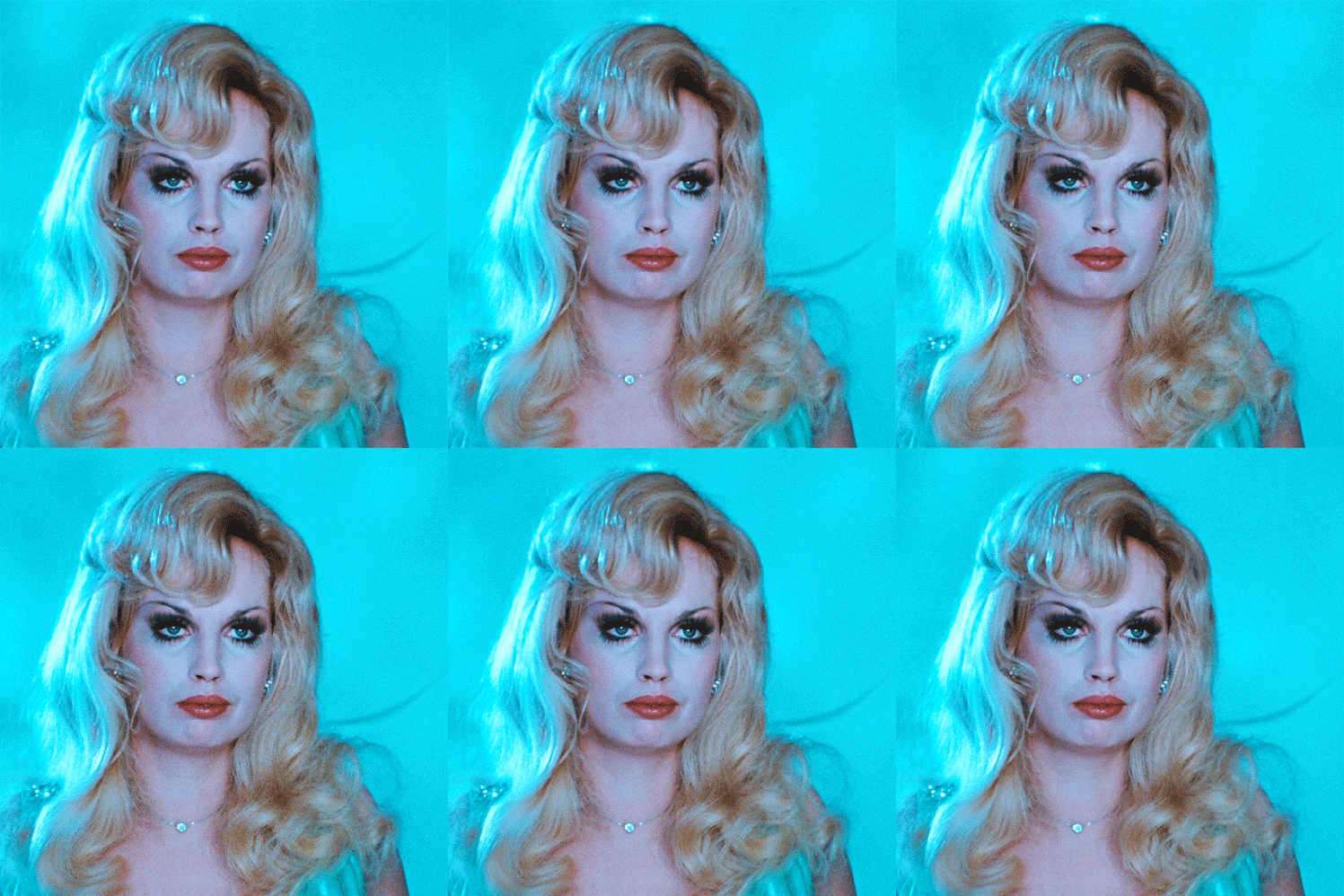
There are better LITTLE WOMENs out there, to be sure, but this one is of interest because it features a brilliant young cast—including Peter Lawford, Elizabeth Taylor, Janet Leigh, and also an old Mary Astor. Plus, Rossano Brazzi is irresistible! He deserves better than to end up with June Allyson, who just might have a drug problem, if you ask me. A Color Cinematography nomination also went to THE BARKLEYS OF BROADWAY, yet another pairing of Fred & Ginger, this time as a bickering song and dance couple who perform in musical comedies. The Technicolor saturation is so intense, Ginger Rogers' red nails and lipstick seem to leap at you from the screen. It borders on trashy, or maybe just like she's trying too hard. For some reason, as I watched, Melanie Griffith kept coming to mind.

[ Ginger Rogers' Technicolor nails & Fred Astaire in THE BARKLEYS OF BROADWAY ]

Nominated for Best Story and Screenplay, as well as for Best Color Cinematography, JOLSON SINGS AGAIN gets my vote as the worst motion picture up for an Oscar in 1949. "One of the most memorable musicals ever!," indeed.


Some films are so bad they put you right to sleep, but this one is so awful it will keep you awake! The movie evidently begins where THE JOLSON STORY left off. A prologue tells us that Al Jolson stopped performing after he was given an ultimatum by his wife, Julie: "It's either the music or me, buddy. The choice is yours." Well, he chose Julie and vowed never to sing again. Then, while out at a swanky supper club one evening, someone recognized Al and insisted he perform a number for them. His ego just wouldn't let him say no. He performed, and so Julie got up from the table and walked out of the restaurant and out of his life for good. At this point, audiences might well be thinking, as was I, "What a horrible ultimatum! That Julie is a selfish and insecure bitch!" 

But then, about eight minutes into the film, you start to slowly realize that this Al Jolson fellow is a real dick. As played by Larry Parks, he is a self-centered egotist who surrounds himself with a bevy of well-dressed older gentlemen that he's constantly ordering about: "Tom, put some things in a bag for me. I'm going to New York." "Steve, go get my car. You're taking me to the airport!" And then, in New York, when we finally get to see Jolson perform, our sympathies shift entirely over to Julie. Her ultimatum suddenly makes perfect sense! Jolson's performance, from which I've included photo excerpts below, is pure 100% honey-cured ham. It's excruciating to watch. Nobody should ever exchange marriage vows with a person who does this sort of thing in public unless they have first made a solemn promise to stop.


...and then at one point in the film we have to sit through what feels like an entire third of the first Jolson Story movie—so of course, unfortunately, we get to see this:  


Watching JOLSON SINGS AGAIN made me hate Al Jolson. And now I hate Larry Parks too. Throughout the film, Jolson is a whiny, insecure has-been who is striving for relevance in a world that has already come to terms with the fact that he sucks. The job of all those who flock and flutter around him is to constantly massage his ego to keep it robust, to make sure he doesn't accidentally catch a glimpse of his sad reality. He's like a giant penis that everyone has to keep feverishly stroking so that he doesn't ever go limp.


I can't tell you much about PRINCE OF FOXES, except that it's set in Rome in the year 1500, stars Tyrone Power and Orson Welles, and it makes a fine sedative. I remember hearing some romantic and political finagling going on and, at one point when I woke up during a battle scene, someone poured boiling black oil directly onto the camera lens, thereby earning a nomination for Best Black and White Cinematography. 


Speaking of Rome, a couple of Italian flicks were thrown into the mix of nominees to shake things up a bit. PAISAN, nominated for Best Story and Screenplay, is actually a set of six short stories that each depict the effects the war has had on Italy and on Italians. The film is directed by Roberto Rossellini; my favorite of the episodes is #3—the one about innocence lost and how the war and its devastation turned everyone into drunkards and whores. THE BICYCLE THIEF, directed by Vittorio de Sica, was nominated for Best Screenplay and took home a special Oscar for Outstanding Foreign Film (there was no competition, as there wasn't yet a category for Best Foreign Language Film).


I'd originally seen THE BICYCLE THIEF back in my first year of college at BYU in 1988. I only remembered it as an old Italian film about a guy whose bike gets stolen and so he and his kid spend the entire film running around town trying to get it back. And while yes, I guess that's true, the film is so much more than that. The screenwriters fill the story with rocks and hard places for our everyday, down-on-his-luck protagonist, Antonio, to get stuck between. Difficult, even impossible, decisions must be made as Antonio tries to find and retrieve his bike so he can remain employed and feed his wife and boy. And all the while, Antonio's son follows and observes, taking note on what it means to be a man, looking to his father as the unfailing example. The film is absolutely heartbreaking.

A few other films from overseas also received Oscar nods in 1949, like PASSPORT TO PIMLICO, a British political farce up for Best Story and Screenplay that comes to life only in the few minutes that Margaret Rutherford prances across the screen. There's a documentary feature called KENJI COMES HOME, but nobody seems to remember anything about it, aside from the fact that it was nominated for an Academy Award. Unfortunately, it's probably been lost to the sands of time. I couldn't find it available anywhere. The only other Best Feature Doc nominee—and the winner of the award—is DAYBREAK IN UDI, one of those fascinating and uncomfortable British documentaries where they show how much they're all working to help the people in Africa try to become more British-like. It's all narrated by the Brits and all the Africans are treated like funny, naughty children. Not available on DVD or video, but you can watch it online here.

 [ DAYBREAK IN UDI ]

None of the fine ladies who were up for the Best Actress Oscar of 1949—Deborah Kerr; Jeanne Crain; Susan Hayward; Loretta Young— really ever stood any chance against Olivia de Havilland as Catherine in THE HEIRESS. De Havilland is commanding in her role as an insecure, naive, and awkward young (but not that young, you know) woman who couldn't...oh, I don't know...couldn't command a mouse to eat cheese. Her father (played expertly by Ralph Richardson, up for Best Supporting Actor) has been chipping away any at any self-esteem she might have developed over the course of her life as he constantly compares her to his beloved beauty of a wife who died when Catherine was born. "Only I know what I lost that day she died, and what I got in her place," he offers disdainfully at one point as an explanation for his cruel behavior. He feels certain his ugly duckling of a daughter will never marry. The only quality she has that men might find attractive is her vast inheritance, but father isn't going to let her fall for THAT one.  


Enter Montgomery Clift. (Yes, please!) He's just returned from Europe, he seems genuinely interested in Catherine, and he's totally hot shit! Sure, he's yet to settle on a particular career, and he sorta' loafed around in Europe with the money he got from a deceased relative (or something), but, hell...he's Montgomery Clift! It all seems too good to be true, but Catherine decides to go ahead and believe in it, and so does her gossipy busybody of an aunt (Miriam Hopkins, wonderful). But Catherine's father just doesn't trust the guy. Drama, confrontation and scenes loaded with terrific dialog ensue. Catherine finally decides to cut ties with her disapproving father and run off with Montgomery Clift, since she is sure he would love to have and to hold her with or without her stupid inheritance. Right?

 [ Montgomery Clift and Olivia de Havilland in THE HEIRESS ]

It's impossible to talk about the brilliance of this film any further without including, or at least suggesting at, some spoilers. If you haven't seen THE HEIRESS before and you'd like to watch it without any spoilers, please skip to the next paragraph. 

No, not this one. The NEXT paragraph. Okay, if you're still with me, let me just say this is such a beautifully sad movie. It's the kind of film that, if it had been released today, the critics on Rotten Tomatoes would give it raves, whereas the "regular people" would say it was just awful, since nowadays the general movie-going public can't handle (or even understand) anything on a movie screen unless it brings them to orgasm right before the closing credits. 

THE HEIRESS is about choosing to believe in the goodness and beauty of others, and in the possibilities of wild, romantic love...and then having to face the fact that that's just not something that's in store for you in life. Time passes, and you reach a point where it would be foolish to even consider hoping for such a thing. As a matter of fact, you're actually rather embarrassed when you think of how you once threw yourself toward romance, body and soul, though you do still recall the feelings, and the longing, with fondness. Okay, this is starting to sound way too much like one of my own diary entries. Anyway, let's just say the film is mesmerizing, and I felt a personal connection to the story. Olivia de Havilland, who turned 101 earlier this month, is mesmerizing. Montgomery Clift's moustache is mesmerizing. Give this film an Oscar! 


Susan Hayward was granted a Best Actress nomination for playing in something called MY FOOLISH HEART, which I saw several weeks ago and now couldn't tell you a thing about, even if I wanted to. But I do want to, so let me get my notes. Ah, yes. It was an ultra-modern melodrama involving scandalous sex out of wedlock, illegitimate pregnancy, that sort of thing. I remember Susan Hayward seeming kinda' badass in the first ten minutes, but then we're suddenly sucked into a feature-length flashback that takes pains to convince everyone in the audience that she's really just as boring and conventional as they are. Keywords: pains; boring; sucked.


Deborah Kerr earned the first of her six Best Actress nominations for EDWARD MY SON, another melodrama, this one about really bad parenting. Kerr actually has more of a supporting role in the film until about halfway through, when she's suddenly cut loose and begins a fascinating downward spiral, eventually turning into a kind of refined variety of Baby Jane Hudson. She's fun to watch.


One of the most interesting and surprising films of 1949 is PINKY, directed by Elia Kazan and produced by Darryl F. Zanuck. The film is an early attempt by Hollywood (20th Century Fox, anyhow) to explore race relations in the American South. Best Actress nominee Jeanne Crain plays Pinky, a nurse who has been living—and passing for white—in the North. She even has a white boyfriend who isn't aware of her roots! Now she's returning to her backwater Southern hometown to visit her mother (Ethel Waters), a poor, uneducated black woman who cares for a wealthy and ailing neighbor, played by Ethel Barrymore. The Ethels are terrific. Both were up for Best Supporting Actress and both outshine the lead performance by Crain. (Kazan, who inherited the film when Zanuck fired director John Ford after a week of shooting, reportedly was unhappy with Crain, saying, "She was a sweet girl, but she was like a Sunday school teacher...she didn't have any fire." Sadly, I'd have to agree.) Still, the film is startling for its confrontation of issues of race in 1949 in an intelligent and meaningful way. In fact, it was so meaningful and intelligent it was banned from being shown in theaters in some stupid town in Texas. 

Another trio of actresses received nominations for their work in the thoughtful and enjoyable comedy-drama COME TO THE STABLE. Loretta Young stars, with Elsa Lanchester and Celeste Holm offering delightful support, in this obscure gem about a pair of good-natured nuns (Young and Holm) who travel from France to build a children's hospital on a particular plot of New England soil, thus fulfilling a promise they made to God for helping them and a bunch of kids survive a round of bombing during the war. They shack up with a zany local religious artist (Lanchester) and set to work laying out their plans. Some thought-provoking NIMBY (Not-In-My-Back-Yard) issues are presented which, I'm sad to say, speak to struggles that communities here in Seattle continue to wrestle with today. Loretta Young is darn good as Sister Margaret, but the role just isn't flashy enough to wrest the Oscar from de Havilland's grasping hands—especially since Young had just received the statue for THE FARMER'S DAUGHTER in 1947. 


With PINKY and COME TO THE STABLE hogging—and dividing votes between—four of the five Best Supporting Actress nominee slots for the year, Mercedes McCambridge had pretty smooth sailing to the win for her forceful and somewhat bizarre turn as a ruthless political campaign strategist in ALL THE KING'S MEN. 

 [ Mercedes McCambridge in ALL THE KING'S MEN ]

The film, which traces the rise of a small-town politician named Willie Stark from grass-roots activist to powerful and corrupt bigwig, also won Best Picture, and Broderick Crawford took the Oscar for Best Actor. (The Willie Stark role had been offered to John Wayne, but he turned it down, saying he felt the picture was 'un-American.') The film is exciting and potent—and seems more relevant now than ever. Thank god it doesn't star John Wayne.

Director Robert Rossen didn't snag an award for ALL THE KING'S MEN though, since Best Director went to Joseph L. Mankiewicz for A LETTER TO THREE WIVES. The film offers a smart, fun look at three women friends who receive a letter from the fourth member of their circle, Addy Ross (voiced by Celeste Holm—it was a very good year for Celeste), just as they're setting out by boat for an all-day island camp-out with a bunch of kiddos. Addy's letter informs them that she's run off with one of their husbands. Far from the nearest pay telephone and without any cell service, the wives contemplate their relationships in turn and wonder which of the three won't have a husband to go home to at the end of the day. Mankiewicz also took the Best Writing, Screenplay award for his work. My favorite line is this, "Oh, let's stop this sudden bickering. We're beginning to behave like some movie about a women's prison."

[ Linda Darnell, Ann Sothern, and Jeanne Crain in A LETTER TO THREE WIVES ]

None of the film's actors (wives Jeanne Crain, Ann Sothern, Linda Darnell...or husbands Jeffrey Lynn, Kirk Douglas, Paul Douglas) has enough total screen time to snag a Best Acting nomination. (Thelma Ritter might have been considered for Best Supporting Actress for her hilarious turn as Ann Sothern's put-upon housemaid, but she isn't even listed in the film's acting credits!) Jeanne Crain at least had her nomination for PINKY to console her, and Kirk Douglas was nominated as Best Actor for a sweaty boxing drama called CHAMPION.
 

Douglas is brilliant in this dark and seedy film that follows a...well, let's just say it: He's a low-down heel. But he's got a talent for fighting, is discovered on the streets, and works his way to boxing fame, developing an affinity for scheming blondes somewhere along the way. 

Last, but not least, we have THE QUIET ONE. Nominated for Best Story and Screenplay, I had expected this one to be another western, probably getting it mixed up with this movie...which, now that I look at it, doesn't seem like a western either. Anyway. What I found instead of a western was a beautiful and surprising cinematic treasure—one of the loveliest films of the year. 
 

This small indie film, narrated by Gary Merrill, seemingly under heavy sedation, was filmed in a NYC school for troubled boys. Or, as the film puts it, at a school for boys who have "reacted with grave disturbance of personality to neglect in their homes and in their community, and who for various reasons of age, religion, race, or special maladjustment, are not cared for by other agencies." Gary introduces us to Donald, the young black boy who is the film's protagonist: "In all these months, Donald has made no friends. We've never seen him smile. He has hardly spoken. He is one of the quiet ones." 

THE QUIET ONE is incredibly insightful and forward thinking for the late 1940s; it feels like a prequel to MOONLIGHT, but made 70 years before. The fact that filmmakers chose to examine the life of a troubled young African-American boy is remarkable. There were troubled white boys too at the school where this was filmed; the producers could easily have decided it would be "safer" to follow one of them for their story instead. I love this film. It's simple, poetic, and moving. It is essentially a silent, and the images are stunning.


As always, thanks to Scarecrow Video for not going out of business and for making all these films available for viewing. If you live in Seattle and you watch movies but you don't go to Scarecrow Video, you suck. Just so you know. 

Check out past editions of The Oscar Project here: 1953, 1936, 1935.

These are the Oscar-nominated films of 1949, with the winners in pink:  

Best Picture:
All the King's Men
Battleground
The Heiress
A Letter to Three Wives
Twelve O'Clock High

Best Director:
Joseph L. Mankiewicz for A LETTER TO THREE WIVES
Carol Reed for THE FALLEN IDOL
Robert Rossen for ALL THE KING'S MEN
William A. Wellman for BATTLEGROUND
William Wyler for THE HEIRESS

Best Actor:
Broderick Crawford in ALL THE KING'S MEN
Kirk Douglas in CHAMPION
Gregory Peck in TWELVE O'CLOCK HIGH
Richard Todd in THE HASTY HEART
John Wayne in SANDS OF IWO JIMA

Best Actress:
Jeanne Crain in PINKY
Olivia de Havilland in THE HEIRESS
Susan Hayward in MY FOOLISH HEART
Deborah Kerr in EDWARD, MY SON
Loretta Young in COME TO THE STABLE

Best Supporting Actor:
John Ireland in ALL THE KING'S MEN 
Dean Jagger in TWELVE O'CLOCK HIGH
Arthur Kennedy in CHAMPION
Ralph Richardson in THE HEIRESS
James Whitmore in BATTLEGROUND

Best Supporting Actress:
Ethel Barrymore in PINKY
Celeste Holm in COME TO THE STABLE
Elsa Lanchester in COME TO THE STABLE
Mercedes McCambridge in ALL THE KING'S MEN
Ethel Waters in PINKY

Best Writing, Story and Screenplay:
Sidney Buchman for JOLSON SINGS AGAIN
T. E. B. Clarke for PASSPORT TO PIMLICO
Alfred Hayes, Federico Fellini, Sergio Amidei, Marcello Pagliero, Roberto Rossellini for PAISAN
Helen Levitt, Janice Loeb, Sidney Meyers for THE QUIET ONE
Robert Pirosh for BATTLEGROUND

Best Writing, Motion Picture Story:
Harry Brown for SANDS OF IWO JIMA
Virginia Kellogg for WHITE HEAT
Clare Boothe Luce for COME TO THE STABLE
Douglas Morrow for THE STRATTON STORY
Shirley W. Smith, Valentine Davies for IT HAPPENS EVERY SPRING

Best Writing, Screenplay:
Carl Foreman for CHAMPION
Graham Greene for THE FALLEN IDOL
Joseph L. Mankiewicz for A LETTER TO THREE WIVES
Robert Rossen for ALL THE KING'S MEN
Cesare Zavattini for THE BICYCLE THIEF

Best Cinematography, Black & White:
Joseph LaShelle for COME TO THE STABLE
Franz Planer for CHAMPION
Leon Shamroy for PRINCE OF FOXES
Leo Tover for THE HEIRESS
Paul Vogel for BATTLEGROUND

Best Cinematography, Color:
Charles G. Clarke for SAND
Winton C. Hoch for SHE WORE A YELLOW RIBBON
Robert H. Planck, Charles Edgar Schoenbaum for LITTLE WOMEN
William E. Snyder for JOLSON SINGS AGAIN
Harry Stradling, Sr. for THE BARKLEYS OF BROADWAY

Best Film Editing:
John Dunning for BATTLEGROUND
Harry Gerstad for CHAMPION
Frederic Knudtson for THE WINDOW
Robert Parrish, Al Clark for ALL THE KING'S MEN
Richard L. Van Enger for SANDS OF IWO JIMA

Best Documentary Feature:
Daybreak In Udi
Kenji Comes Home

Special Foreign Language Film Award:
The Bicycle Thief

Sunday, March 5, 2017

The Oscar Project: 1935


It's been over six years since I posted my first two installments of The Oscar Project, for 1953 and 1936. I actually watched all the nominated films of 1978 in preparation for round #3 back in 2011, but I procrastinated so long in writing about them, I finally couldn't remember enough detail about the films to adequately review them here. I'll re-visit 1978 later on. In the meantime, I've come up with a rundown for the films nominated by the Academy as the best of 1935. 

The idea behind The Oscar Project is to evaluate the year's most popular films, while discovering new treasures along the way—especially among forgotten films that might not have generated tons of revenue in their day, but that the Academy showed love to anyhow by nominating them for minor awards—a tradition that continues today, with low-profile gems like THE LOBSTER and 20TH CENTURY WOMEN getting nods—but no statues—for Best Original Screenplay of 2016.

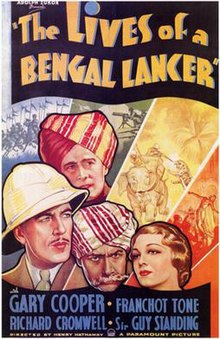
I selected 1935 for this edition pretty much by accident. A few months ago I rented THE GENERAL DIED AT DAWN, a 1936 Gary Cooper film that's only available in a DVD set with a few of his other films from the 1930s. (According to my 1936 edition of The Oscar Project, I'd already watched THE GENERAL DIED AT DAWN back in 2010, but somehow at no point did I recall ever having seen it before as I watched it a second time. I must be getting old.) Figuring I might as well watch one or two of the other films in the set while I had it, I put on THE LIVES OF A BENGAL LANCER one evening when I had nothing else to do. I figured it would probably be a culturally offensive bore, but it was absolutely terrific! 


Not only does this fun buddy-adventure movie about British cavalrymen defending India's Northwest Frontier have snappy dialogue and exotic locales (courtesy of Southern California and the Paramount back lot, I'm sure) but there's a sweet, strange and exciting current of homoeroticism running through the story too. It's especially apparent in the bathroom scene, when the older and more experienced (and shirtless) Lieutenant McGregor (Cooper) is shaving while expressing concern to the naive young recruit, Lieutenant Stone (Richard Cromwell), that his young, tender spirit will be broken by going to war. The conversation takes place as Stone washes himself in the bathtub next to McGregor, and then the scene concludes with McGregor playfully splattering the naked young man's handsome face with a gob of white shaving cream.


THE LIVES OF A BENGAL LANCER was up for Best Picture of 1935, as well as Best Director (Henry Hathaway), Screenplay (by Achmed Abdullah, John L. Balderston, Grover Jones, William Slavens McNutt, and Waldemar Young—one of Mormon pioneer Brigham Young's many grandsons!), and a few other awards. I realized I'd really been missing out on some dynamite oldies, so I figured I'd watch all the other nominated films of 1935 and get this Oscar Project thing back off the ground.


Several of the year's nominees are ones I had seen before (and actually even remembered), including Best Picture winner MUTINY ON THE BOUNTY. The film tells the true story of a crew's mutiny against their sadistic captain (Captain Bligh, played with chilling excellence by Charles Laughton) aboard the HMS Bounty as the ship makes its two-year voyage from Portsmouth, England to Tahiti in 1787. The film is sensational and spectacularly good, standing head and shoulders above most of its fellow Best Picture nominees. The magnificence of what you see on the screen and the caliber of the performances make this a well-deserved winner in this category. Inexplicably, the film only earned that one Academy Award. 

The trio of riveting lead performances by Laughton, Clark Gable, and Franchot Tone earned Best Actor nominations for each of them, setting the record for the most nominations in this category for a single film. Unfortunately, splitting the MUTINY vote three ways likely disadvantaged all three stars, and the award ended up in the relatively undeserving hands of Victor McLaglen for THE INFORMER instead. (The only other competition in the Best Actor field was write-in candidate Paul Muni in BLACK FURY, a film about coal miners organizing a strike in Pennsylvania. This was light years before anyone really cared about perfect accents, and in BLACK FURY Paul Muni often sounds like Dracula.)


THE INFORMER, helmed by Best Director winner John Ford, isn't a very good movie, though it was up for Best Picture, Director, Actor, and Screenplay (by Dudley Nichols), winning in three of those categories. The film takes place on the foggy urban streets of Dublin over the course of a single night (moody and menacing, the film's gorgeous cinematography by Joseph H. August is the one Oscar-worthy thing the Academy managed to ignore). The Irish War of Independence is raging, and an alcoholic dunce named Gypo (McLaglen), who's been kicked out of the IRA for not having any guts, suddenly decides to turn against Frankie, his friend and former IRA colleague who's in hiding, so he can earn the £20 bounty Frankie's got on his head. The money will allow Gypo to buy two £10 tickets so that he and his street-walker girlfriend can sail to America for a new start. 


Again, each ticket to America costs £10, as we repeatedly see on an advertising sign through a store window. Gypo would like to buy two of them. That equals £20, which, as the REWARD poster reminds us over and over again in special-effect double-exposure fade-ins, is the exact same amount as the reward that's offered for informing on Frankie. The fact that Gypo needs the £20 to buy two £10 tickets is drilled home so thoroughly, my forehead actually began to bleed. Anyway, Gypo does get the money and then makes a series of ridiculously stupid decisions that get him going nowhere fast. But Victor McLaglen gets to play drunk throughout most of the film, and, as Bette Davis can tell you, playing drunk in 1935 leads directly to Oscar Gold.


Davis was somehow denied a 1934 nomination for her game-changing performance in OF HUMAN BONDAGE, but she patched things up with the Academy in 1935 by taking home the Best Actress statuette for DANGEROUS. As Joyce Heath, a famous stage actress who's burned all her bridges and landed on the skids, Bette puts her pedal to the metal with a series of tantrums that are very modern indeed. Did I mention that Joyce Heath likes to drink? Sadly, Joyce's vinegar turns to sugar water in the final reel, and DANGEROUS ends like ONE FLEW OVER THE CUCKOO'S NEST, with the lobotomy performed by Joseph Breen

In the British film ESCAPE ME NEVER, Gemma Jones is yet another willful and exciting character who's lobotomized by her screenplay in the final act. As played by the luminous Elisabeth Bergner (a new discovery for me—she's a European stage actress of Austro-Hungarian descent up for Best Actress of 1935, but largely forgotten today), Gemma is initially full of independence, playfulness, mischief and love of life. As the story presents its four-character love triangle (a love square?) one of the gentlemen tells Gemma he would like to marry her to feel safer, because he's afraid of losing her to the other guy. She answers in her delightfully lilting Austro-Hungarian accent, "Safer? Why? I wouldn't stay one minute longer than I wanted to because of being married." It's a startlingly refreshing line to hear delivered by a woman on the screen in 1935, and so European!

But she does end up marrying the guy and he's a total dick. Gemma is driven to madness by his selfishness and deceit, but the film ends on a supposedly "upbeat" note, with Gemma hugging her abusive husband and assuring him in her throaty, Austro-Hungarian way, "I don't want a better man." The music swells. It's only then that we realize ESCAPE ME NEVER is actually the perfect title for a horror movie.

 [ Elisabeth Bergner with her dud husband in ESCAPE ME NEVER ]

The Bergner film is one of the two Oscar nominees from 1935 that has never been released on DVD or video. The other is THE SCOUNDREL, starring Noel Coward, which won the Oscar for Best Original Story. Unfortunately, the Coward film isn't available for viewing online without signing up on some fishy-looking websites. But thanks to a British bloke named Calum Reed, a blurry version of ESCAPE ME NEVER can be viewed via nine YouTube segments, starting right here.

The other nominees for Best Actress of 1935 are Merle Oberon for THE DARK ANGEL, a cornball wartime love triangle that's just about as exciting as this poster... 


...Miriam Hopkins in BECKY SHARP, an early Technicolor headache-inducer in which every line of dialogue is shouted at top volume; Claudette Colbert in PRIVATE WORLDS as a woman who's shattering glass ceilings in a rare and interesting examination of life and work as a female doctor in a mental hospital circa 1935 (yes, she falls in love...but it's with Charles Boyer, so she is forgiven. Joan Bennett also adds some terrific support in this film); and Katharine Hepburn in ALICE ADAMS.


I had recorded a generally favorable impression of ALICE ADAMS when I first watched it a few years ago, but I think I may know what went wrong. I had been dating a fellow at the time who wasn't really fond of classic movies, so I'd rented this Oscar-nominated Katharine Hepburn film figuring it would be a sure-fire way to win him over. I was eager for him to like it, and I was eager to enjoy it too. We tried hard, and we succeeded. But now the fellow has long since gone and I'm contentedly alone, giving the film another look. Holy lobotomies. Almost everyone involved in ALICE ADAMS seems to have gone under the knife, and Ms. Hepburn ought to have her head examined too for getting mixed up with this horrible band of hooligans. 


Though it probably seems even more absurd now, with her entire 70-year career in hindsight, it's still hard to imagine that audiences of the '30s could have believed that Katharine Hepburn—this gorgeous, angular, amazing, and strong-willed 28-year-old woman—would ever be caught sobbing by a rainy upstairs window because she didn't fit in with the popular rich girls in her small, nowhere American town. It just looks wrong. Though she's working awfully hard to try to convince us otherwise, you can still clearly tell that Alice, via Hepburn, really just wants to bulldoze over every one of those wimpy skimmed milk-maidens if they even so much as look at her sideways. Then she'd just pack up and head out of town, leaving the morons behind. 

Hepburn is horribly miscast here—she seems twice as tall as everyone else, and I don't mean just physically. Yet the film's "happy ending" puts her in the arms of a wealthy beau (a dull and not-very-attractive Fred MacMurray, who rescues Alice from the living hell of having to actually work for a living by asking her out just as she's about to step through the employment office door—thank GOD!) He never once shows a shred of personality or anything else that would otherwise indicate he and Alice might be a perfect match for life. He's got money, and she needs it—true love!

[ Katharine Hepburn and Fred MacMurray in ALICE ADAMS ]

There's also the character of Alice's n'er-do-well brother, Walter, to consider, played by Frank Albertson. Walter at first seems like a forward-thinking social pioneer as he loudly acknowledges his acquaintance with the African-American bandleader and servants who are working the hioty-toity party hosted by the town's wealthy elites. He seems like someone who could teach Alice a thing or two about society, about what it means to be kind and to earn the genuine friendship of others based on things besides class, wealth, and privilege. But no. A closer look reveals that audiences are actually supposed to identify with Alice's humiliation and shame when her brother is openly chummy with the hard-working 'colored folk' right in front of the powerful white people she's hoping to impress. Alice, and thus the audience, learns no lesson here. And then Walter ends up being a gambler, a thief and a cheat. But I guess that's just what happens when you hang out with black people.
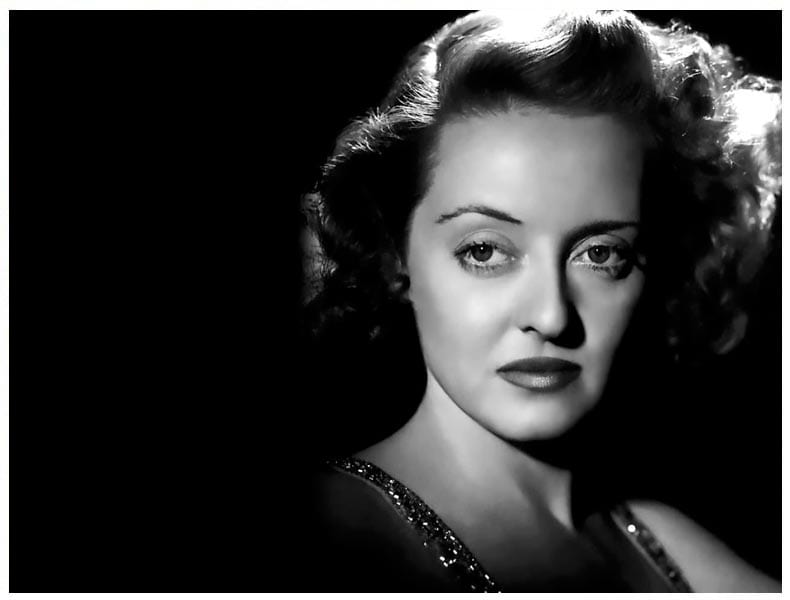
There are so many things wrong with this movie—and it was up for Best Picture of the year! I admit I'd probably enjoy watching Hepburn even if she showed up in the cast of 50 SHADES OF GREY, so I guess there's that. And Hattie McDaniel is on hand to work her usual magic, but she's stuck in yet another housekeeping role that sinks her deeper into the muck of old Hollywood stereotypes. I was just hoping Alice was finally gonna' kick some snobby white ass in the film's final reel. She seems like she wants to, and we all know that she could. But instead she just melts into bland, wealthy white arms like a pad of eager butter. The end.
[ Hattie McDaniel and Fred Stone in ALICE ADAMS ]

Other 1935 duds include Best Picture nominees RUGGLES OF RED GAP, a dated comedy of manners starring Charles Laughton (again) as a stuffy, put-upon English butler transported to the rugged wilds of the US Pacific Northwest, and NAUGHTY MARIETTA, featuring Jeanette MacDonald and Nelson Eddy. It's another one of their costumed musical romances where the vocal vibrato is so forceful and shrill you can't actually understand anything they're saying. All I know is when I fell asleep, Jeanette MacDonald was rebuffing the advances of Nelson Eddy, but when I woke up a little later they were making out and singing cheek to cheek. I wasn't surprised.


Best Original Story nominee THE GAY DECEPTION is supposedly a romantic comedy involving a European prince posing as a hotel bellboy, but it's neither very comical nor romantic. And it certainly makes no effort to live up to its titillating title. There's not much to recommend Cecil B. DeMille's THE CRUSADES either, unless you enjoy watching men parading around in suits of armor, repeatedly offending each other and then threatening war. Loretta Young is ravishing though, and you have to admit that Ian Keith as Saladin is about a million times sexier than Henry Wilcoxon as King Richard I, though I think we're probably supposed to feel the other way around.

TOP HAT was Fred and Ginger's #1 money-maker as a team, and they landed a Best Picture nomination to boot. The plot is basically an episode of "Three's Company" stretched out like pink taffy candy (anyone else notice that geeky young Fred Astaire could easily grow up to become geeky old Mr. Furley?), with delightfully comic turns by Erik Rhodes and Helen Broderick in supporting roles. Oh, and there may have been some bits of dynamite dancing in the film too somewhere along the way. 


DAVID COPPERFIELD is a star-stuffed Dicksensonian period piece that didn't quite put me to sleep, though toward the end it certainly began to try, and BARBARY COAST shows that Miriam Hopkins actually did deserve her 1935 Best Actress nomination, though the Academy assigned it to the wrong film. Directed by Howard Hawks and set in the midst of the 1849 California gold rush, the dialog sparkles and snaps between the gold-digging Hopkins and her saloon-keeper husband, played by Edward G. Robinson, who she's married to just for his money. 


Hollywood's stark and serene 1935 version of LES MISÉRABLES stars Fredric March as Jean Valjean and Charles Laughton (he had a very busy year) as Inspector Javert. The plot is well-worn, but both actors are excellent, as is the moody Oscar-nominated cinematography by Gregg Toland. And although this was not my first viewing of A MIDSUMMER NIGHT'S DREAM, I was even more captivated by its strangeness and beauty the second time around.


If THE INFORMER went to town and back with its new 'double-exposure' technology, then A MIDSUMMER NIGHT'S DREAM goes all the way to the mountains. The effect isn't used here to bludgeon, as in the John Ford film; instead it swaddles your head in clouds, sparkles and tinsel and then shows you the magic of the mystical forest where fairies and wood nymphs are a plain old everyday thing. 


Based on Shakespeare's famous play, the story follows three concurrent narratives, all of which collide in the magical woods just outside a castle's walls. Young lovers from the local palace plan a discreet rendezvous; a nitwit band of amateur actors arranges a rehearsal of their play before presenting it to royalty; the king and queen of the fairies are having an argument and begin fiddling with the mortals who stumble into their realm, making them fall in love with the wrong people and turning them into animals, that sort of thing. 


A MIDSUMMER NIGHT'S DREAM gave Olivia de Havilland one of her very fist roles (I love that she's still around to talk about her films; she'll be 101 this summer), alongside a stellar cast that includes James Cagney and Joe E. Brown, Anita Louise, Mickey Rooney, Dick Powell, Jean Muir, Ross Alexander, and Victor Jory. And speaking of James Cagney, he also starred, without the donkey head, in G-MEN, a tough, gritty crime thriller about the inner workings of the early days in the FBI. Added as a write-in candidate for Best Original Story, the film features a commanding lead performance with strong support from Ann Dvorak and Margaret Lindsay.


Two films from 1935 for which I had the lowest of expectations actually ended up being among my favorites. First, since I'm not much into pirate movies, I wasn't particularly keen on sitting myself through CAPTAIN BLOOD. And then, since it seems like there are too many movies from the '30s with titles like "Broadway Melody," or "Broadway Review" or "Broadway Follies" or whatever, I figured they were all pretty generic and interchangeable, and probably horribly dated too. I was not excited to watch BROADWAY MELODY OF 1936. But then...


According to one of the bonus features on the CAPTAIN BLOOD DVD, pirate movies had gone out of style by 1935. But with the modest success of TREASURE ISLAND the previous year, Warner Brothers was eager to assemble a swashbuckling adventure yarn of their own! They wanted to cast Wallace Beery, since he had been so effective as Long John Silver in the pirate movie revival of '34, but he was busy with other projects. The Brothers Warner considered a number of other popular actors who were available, but none seemed quite right for the role. Not every Hollywood heartthrob can swash buckles in a convincing way. 

Someone suggested they test a dashing young actor named Errol Flynn who had made a few small films in England with cringe-worthy titles like DON'T BET ON BLONDES and THE CASE OF THE CURIOUS BRIDE. They tested him and he did well. They tested him again and he did well. They tested the hell out of him and he did well. This kid could swashbuckle! Finally it was decided that casting a virtual unknown as the romantic lead of their new adventure pirate movie was a gamble they were willing to take—a scary proposition in an era where a film's stars are what made the picture, both for the studio and for the public. Though nervous when filming began, Flynn showed a sure-footed magnetism and radiated heat right off the screen. A star was born! It was reportedly one of the most electrifying debuts in Hollywood history.


[ Errol Flynn in CAPTAIN BLOOD ]

It was equally daring to select the relatively unknown Olivia de Havilland as Flynn's leading lady. She had also only made a few small films at this point; her larger role in A MIDSUMMER NIGHT'S DREAM hadn't yet been seen by audiences. Still, the studio decided to take a chance and added her name next to Flynn's on the poster for CAPTAIN BLOOD. De Havilland is, of course, magnificent. She brings a style and intelligence to her role that seems to catapult the "movie heroine" out of the 1930s and into the future of cinema. De Havilland and Flynn were immensely appealing together. Audiences loved them, and they went on to costar in a total of eight films. 

[ Olivia de Havilland and Errol Flynn in CAPTAIN BLOOD ]

The Story of CAPTAIN BLOOD involves a gaggle of 17th century British prisoners who are carted off to slavery in the West Indies. Doctor Peter Blood is swept away with them since he offered his professional services to a patron who had been involved in a rebellion against the King of England. Blood is purchased by Olivia de Havilland in the West Indies (she's the niece of the local military commander) and that's where their entanglement begins. When a shipload of Spaniards attacks and invades the island, Blood and his comrades escape and take over the ship, thrusting themselves into lives of piracy. 

Fortunately for everyone, Captain Blood's pirates live by a code of ethics that coincidentally keeps them in line with the strict rules of conduct outlined by the Hollywood Motion Picture Code of 1935. For example, any of Captain Blood's crew will be left to die on a deserted island if they are found to have molested any woman captive "against her will." (But that means consensual sex is still okay!) 

Captain Blood and his band of gentlemen pirates are the terror of the high seas, plundering and pillaging and carrying on. Actors Guy Kibbee and Ross Alexander are particularly good, acting as pirates in a supporting role (sadly, Alexander's career was cut short when he committed suicide in January of 1937 at age 29). As the French pirate Captain Levasseur, Basil Rathbone is once again incredibly sexy indeed. The film earned nominations for Best Picture, Director (Michael Curtiz), Screenplay (Casey Robinson—another write-in not officially chosen by the Academy), Sound Recording and Musical Score. It didn't win in any of these categories.


With its lavish sets, witty dialogue, breezy music, incredible dance sequences, pop-up stage furniture and decorative pop-open flower buds—and just for a general, overall good time—BROADWAY MELODY OF 1936 simply cannot be beat. There's even hillbilly sibling entertainers (Buddy and Vilma Ebsen) and a luggish, dim-witted gumshoe (Sid Silvers) who masquerades as an imaginary French diva...then remains in the elaborate disguise way, way longer than necessary. It's wonderful. 

 [ Nick Long, Jr., June Knight, and Robert Taylor in BROADWAY MELODY OF 1936 ]

The plot is par for the course. An up-and-coming Broadway producer (Robert Taylor) wants to stage his first big musical, but he's compelled to cast a demanding leading lady (June Knight—terrific on and off the dance floor) with a big pocketbook (she'd like to give him more than just her money) in order to be able to fund the show. Meanwhile, the producer's high school sweetheart (Eleanor Powell—no slouch on the dance floor herself) drops into town from Albany with no pocketbook whatsoever, but with plenty of stardust in her eyes. The down-to-earth gal from Albany connects with a number of eccentric characters (Una Merkel is especially good as the producer's put-upon secretary) who try to help her steal the show. Hilarity ensues. 

The thing I love most about this movie (aside from the show-stopping dance mania performed by Nick Long, Jr.—you can read everything you've ever wanted to know about this forgotten superstar here, thanks to Bob Atchison and his extensive research) is that the men are all basically boobs and the action is driven forward by women. It's a feminist musical from 1935!

Since the Best Supporting Actress and Best Supporting Actor categories weren't introduced until 1936, I've gone ahead and put together my own list of those nominees—with winners too—based on what I've seen over the past several months:

Best Supporting Actress:
Joan Bennett in PRIVATE WORLDS
Helen Broderick in TOP HAT
Margaret Lindsay in G-MEN 
Una Merkel in BROADWAY MELODY OF 1936
Edna May Oliver in DAVID COPPERFIELD
Alison Skipworth in DANGEROUS

Best Supporting Actor:
Ross Alexander in CAPTAIN BLOOD
Walter Brennen in BARBARY COAST
Charles Laughton in LES MISÉRABLES
Eddie Quillan in MUTINY ON THE BOUNTY
Erik Rhodes in TOP HAT
Sir Guy Standing in THE LIVES OF A BENGAL LANCER

[ Joan Bennett and Claudette Colbert in PRIVATE WORLDS ]

Thanks again to the folks who've been churning out titles from the studio vaults, since I wouldn't have been able to watch several of these 1935 releases on DVD without them. Thanks also to Scarecrow Video, for having all of those vault releases available, along with everything else that's ever been released on VHS or DVD. 

And a big "up yours" to Redbox and other movie vending machine companies. You're helping to make people narrow and dumb. And by killing off all of the country's video stores, you've reduced millions of peoples' cinematic viewing options from thousands down to tens. And we all know that you'd NEVER stick anything from 1935 into one of your stupid vending machines.

Here are the Oscar-nominated films of 1935 for categories that actually did exist, with the winners listed in pink:  

Best Picture:
Alice Adams
Broadway Melody of 1936
Captain Blood
David Copperfield
The Informer
The Lives of a Bengal Lancer
A Midsummer Night's Dream
Les Misérables
Mutiny on the Bounty
Naughty Marietta
Ruggles of Red Gap
Top Hat

Best Director:
John Ford for THE INFORMER
Henry Hathaway for THE LIVES OF A BENGAL LANCER
Frank Lloyd for MUTINY ON THE BOUNTY
Michael Curtiz for CAPTAIN BLOOD (write-in nominee)

Best Actor:
Clark Gable in MUTINY ON THE BOUNTY
Charles Laughton in MUTINY ON THE BOUNTY
Victor McLaglen in THE INFORMER
Franchot Tone in MUTINY ON THE BOUNTY
Paul Muni in BLACK FURY (write-in nominee)

Best Actress:
Elisabeth Bergner in ESCAPE ME NEVER
Claudette Colbert in PRIVATE WORLDS
Bette Davis in DANGEROUS
Katharine Hepburn in ALICE ADAMS
Miriam Hopkins in BECKY SHARP
Merle Oberon in THE DARK ANGEL

Best Writing, Original Story:
Moss Hart for BROADWAY MELODY OF 1936
Don Hartman, Stephen Morehouse Avery for THE GAY DECEPTION
Ben Hecht, Charles MacArthur for THE SCOUNDREL
Darryl F. Zanuck for G-MEN (write-in nominee)

Best Writing, Screenplay:
Achmed Abdullah, John L. Balderston, Grover Jones, William Slavens McNutt, Waldemar Young for THE LIVES OF A BENGAL LANCER
Jules Furthman, Talbot Jennings, Carey Wilson for MUTINY ON THE BOUNTY
Dudley Nichols for THE INFORMER
Casey Robinson for CAPTAIN BLOOD (write-in nominee)

Best Cinematography:
Ray June for BARBARY COAST
Victor Milner for THE CRUSADES
Hal Mohr for A MIDSUMMER NIGHT'S DREAM (write-in nominee; the first and only such nominee to win)
Gregg Toland for LES MISÉRABLES